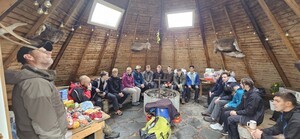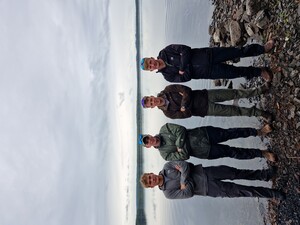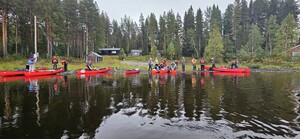
In September 2025, 54 Officer Cadets from six University Air Squadrons embarked on a long-running expedition to the wilderness of northern Sweden. Divided into three groups of around 18, the students each spent a week canoeing down a 60km stretch of the Harkan River in Jämtland County. This trip aimed to build resilience, teamwork and leadership skills whilst also learning survival techniques and improving the group’s canoeing ability.
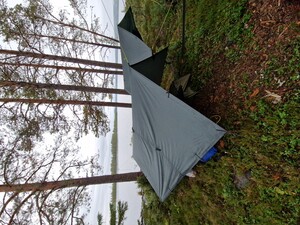
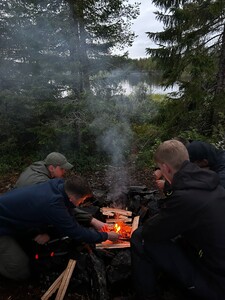
Each trip began with a two-hour flight from Gatwick to Trondheim Airport in Norway, followed by a four-hour coach transfer to Lit campsite in Sweden, where the groups arrived in the early hours of the morning. After a short rest, the students faced their first challenge: with a limited budget, they had to buy enough food to last the week while ensuring it could all fit into the canoes. The rest of the day was spent on administrative tasks and loading equipment before setting off on a short paddle to the first campsite. Here, the groups were tasked with lighting their first fires, setting up tarps, and organising hammocks and sleeping bags. Some groups were luckier than others; rain made fire-lighting and camp setup a far greater challenge for those caught in it, testing their perseverance from the very start.
The following morning, the groups cooked breakfast before learning how to set up their fishing rods. Once their equipment was packed away, they set off on their first full day of canoeing. This stretch of the river included a section of grade two rapids, which challenged the cadets to put their newly learned skills into practice and rely on their canoe partners for balance and control. Some were even lucky enough to catch a fish along the way, while others took the opportunity to take in the Swedish wilderness.
As the week unfolded, the groups steadily made their way downstream, with each stage of the river bringing new challenges and opportunities to build resilience. Alongside their canoeing, the cadets developed a range of bushcraft skills that quickly became essential to life on the expedition. When they were lucky enough to catch something, they learned how to fillet and prepare their fish, experimented with different campfire cooking methods, and picked up practical techniques to avoid common pitfalls such as burnt porridge. In quieter moments, some tried their hand at spoon whittling, while others braved the cold waters for a swim. Even seemingly simple tasks, such as collecting firewood or keeping equipment dry, required cooperation and careful thought. With every camp they set up, the cadets grew more confident in their ability to adapt to the wilderness and rely on one another.
Overall, the expedition was a rewarding and memorable experience for everyone involved. Each group returned having learnt new skills, built greater confidence and developed a strong sense of camaraderie and teamwork. We are extremely grateful to the Ulysees Trust for their support, which made this incredible experience financially accessible to all students.
Quotes:
“I thoroughly enjoyed my time in Sweden. We spent long days canoeing on the river exploring quiet stretches of water as well as navigating rapids along the way. I also learnt bushcraft skills such as fire-lighting and shelter building and tried my hand at fishing. I was really happy with how well the team worked together, especially alongside another squadron. Everyone pulled their weight, and it made the whole trip run smoothly. Overall, it was a challenging but enjoyable week and I came away with new skills and great memories”.
– Off Cdt Georgia Mann.
“The trip was very good at improving my resilience, bushcraft, and canoeing skills through multiple days out in the field. Especially lighting fires in the wet.”
- APO Joshua Grey.