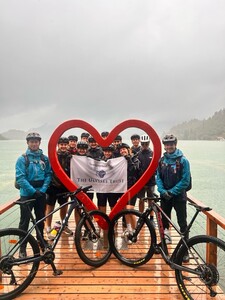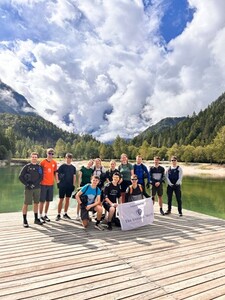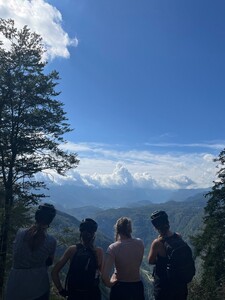
On the 8th of September 2025, eleven Officer Cadets from Northumbrian, Yorkshire, and Oxford University Air Squadrons embarked on a major adventurous training expedition to Slovenia. Supported by two members of staff and a designated driver their task was to complete a 227.9km cycle, tackling 4925m of ascent over 5 days across the Juliana Alps. In preparation for the expedition, training days were organised at Hamsterley Forest, County Durham, in order to teach the basic techniques required to make the most out of the expedition. Thanks to substantial monetary support from the Ulysses Trust, personnel on the expeditions were able to go outside their comfort zones, break down mental barriers, and push themselves to their physical limits.
Beginning in the picturesque town of Bled, the group departed in the early morning, amongst the gothic landmarks of the town Castle and Church of Assumption. Their resolve was immediately tested with a day of persistent Alpine rain, as the group climbed through mountain villages finishing the day near the town of Kranjska Gora on the Austrian border. Working together to build camp, a sense of unity began to be forged. With that, the rain began to ease off, revealing the rugged but majestic mountains of Triglav national park.
Day two involved the expedition’s highest elevation by tackling Slovenia’s highest mountain pass. Vršič at 1611m of altitude challenged the group to work together, motivate one another, and test their core endurance. Over two hours of climbing taught everybody the importance of digging deep. Talking to Officer Cadet Archie Hine afterwards he said, “Today gave everybody the confidence that when we’re working as group, there’s not much we can’t do”. A more relaxed downhill to the campsite allowed time to think about the fantastic work of the Ulysses Trust allowing cadet forces and the UK’s volunteer reserve to have experiences like this.
The next few mornings included cycling through green valleys, alongside many raging river torrents flowing towards the Italian border. Stopping briefly in the town of Kobarid, we learned of its importance in the early months of WWI.
At the overnight halt, over dinner the group shared the biggest challenges so far on the expedition. Mostly in agreement that the physical challenge had been the most demanding aspect of the week, talk began about the growing sense of accomplishment, and the sense of success everyone would feel on the return to Bled.
The next day brought a long but gradual climb to the final campsite. Along the way, individuals worked on their leadership techniques being assigned small legs of the journey. Under the late summer sun this boosted the skills and confidence of the group overall.
The final day was a technical decent into Bled. Testing their ability over a range of surfaces, the group continued to encourage each other, despite growing tiredness. On the evening of the 14th of September, the group rolled into Bled, united by a massive sense of pride and achievement.
The impact of Expedition Juliana Bike is already being felt across Northumbrian Universities Air Squadron, with the returning members sharing their experiences and challenges with their cohort. Quoting senior student, Acting Pilot Officer Amy Searle “The success of Ex Juliana Bike is that all participants have experienced a brilliant expedition and are much more likely to get involved and run events in the future”. The support received from the Ulysses Trust has created friendships that will last a lifetime, sharing memories from across the trip regularly.
From my perspective it was a trip of a lifetime, and it would not have been possible without the generosity of the Ulysses Trust.