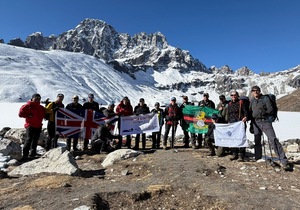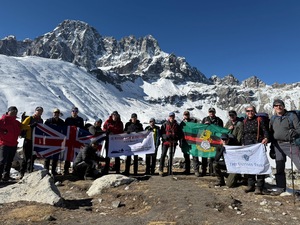
In February 2026, a team drawn from across Headquarters Land Warfare Centre (LWC) and Warminster Garrison undertook Exercise Wyvern Khumbu Challenge 26 (EWKC26) – a demanding High Risk and Remote (HR&R) Adventurous Training expedition to the Himalayas. Over 21 days, between 8–28 February, the team attempted the renowned Everest Three Passes Trek, operating at altitudes up to 5,500 metres in near winter conditions. The challenge tested leadership, judgement, fitness, and resilience against some of the world’s most hostile environments. Although the full Three Passes objective could not be completed due to the climatic conditions and environmental risks, the team successfully adapted, replanned, and pushed forward to reach Everest Base Camp (EBC). In doing so, they met all Adventurous Training (AT) aims, significantly developing their mountaineering skills and experience, decision-making, and ability to operate under pressure. The experience proved transformational not only for individuals but for the collective capability of LWC personnel.
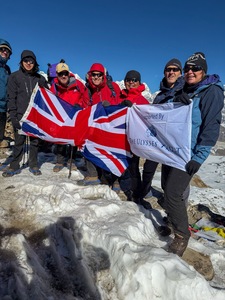
Setting the Conditions: Planning, Training and Preparation: EWKC26 represented the first time an LWC team had attempted a high-altitude trek of this nature. Months of planning were required to secure the pre-monsoon slot, navigate diplomatic and medical approvals, deliver training, and develop a robust risk management framework. Fund raising was key and without the support of the Army Sports Lottery, The Ulysses Trust and Units, expeds of this nature would be very challenging to mount and undertake. The Activity Owner, Activity Deliverer, and Chief Instructor (CI) worked closely with subject matter experts across Army Adventurous Training Group (AATG), the Expedition Medicine Advisory Group (EMAG), and British Gurkhas Nepal (BGN) to build a comprehensive Safe System of Work. Pre-deployment training included multiday walks in Dartmoor, the Mendips and the Brecon Beacons, ropework instruction, acclimatisation theory, emergency drills, and physical conditioning. The importance of this preparation later became starkly apparent when the team faced deep snow, subzero temperatures and the medical challenge of altitude sickness in Nepal.
Arriving in Nepal: Culture, Acclimatisation and the Start of the Trek: The team arrived in Kathmandu on 9 February and immediately began the process of acclimatisation – physically, culturally, and administratively. After receiving security and medical briefings from British Gurkhas Nepal (BGN), the team spent time preparing kit, securing local SIM cards, and orientating themselves around Thamel before flying to the infamously-challenging Lukla airstrip the next morning. The early stages of the trek took the team through Phakding, Namche Bazaar and Thame. These initial days were vital in determining the group’s response to altitude. Daily pulse, oxygen saturation and Lake Louise scores were recorded morning and evening, allowing instructors to spot early signs of Acute Mountain Sickness (AMS). The team adopted a routine of warmups led by their PTI, hydration checks, and daily evening briefs to support team cohesion and readiness. Cultural engagement was an important dimension of EWKC26. The team visited monasteries, contributed supplies to a local school in Thame, and relied heavily on their cultural advisor and exceptional trekking guides, whose local knowledge proved invaluable.
The Renjo La Crossing: A Severe Test of Judgement and Endurance: The first major challenge came on Day 7 with the ascent of the Renjo La Pass (5360m). What should have been an 8 hour crossing became a gruelling 13 hour battle with snow, ice and temperatures well below freezing. Several team members developed AMS symptoms, including headaches, nausea and impaired decision-making, while others struggled with the cold or gastrointestinal issues. Despite meticulous planning, the conditions far exceeded those expected for a “summer mountaineering” expedition. Instructors – experienced, qualified and calm under pressure implemented dynamic risk assessments throughout the day. Microspikes were deployed, a confidence rope was used, and instructors and guides worked tirelessly to keep the team safe. By the time the team reached Gokyo, it was clear the environment was beyond the remit of the JSMEL(S) qualification. A command decision was made to enact the CONPLAN and divert away from the two remaining high passes, whose environmental conditions were assessed as even more hazardous. Although the Three Passes objective had to be abandoned, the decision exemplified sound judgement, risk management and leadership under pressure.
A Serious Medical Emergency: Testing the Med Plan Under Real Conditions: Shortly after the Renjo La crossing, one expedition member developed worsening respiratory symptoms. Initially suspected to be a chest infection, their condition deteriorated despite a 700metre descent. With communications proving unreliable (intermittent WiFi, patchy mobile coverage and a satphone struggling in 20°C conditions) the team fought to reach back for medical support. As a result of fighting for comms, advice was secured from BGN and the team EMAG, and a MEDEVAC secured for first light. The casualty was diagnosed with High Altitude Pulmonary Oedema (HAPE) – a potentially fatal condition. Early identification, application of the medical plan, and expert teamwork prevented a far more serious outcome, and they made a full recovery once at hospital. This incident validated the months of preparation invested in developing the medical plan, rehearsing actions on, and establishing a robust PACE communication strategy.
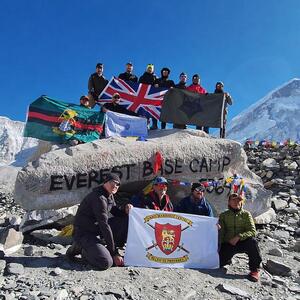
Adapting the Plan and Achieving Success: Everest Base Camp: With the safety of the team prioritised, EWKC26 adopted a new route South from Dhole, eventually pushing up through Pangboche, Dughla and Gorak Shep. Fatigue, cold, and reduced calorific intake all became factors as the team ascended higher, but acclimatisation proved effective and morale remained high. On 21 February, in temperatures of 20°C and under crystal-clear Himalayan skies, the team reached Everest Base Camp (5,364m). With the Khumbu icefall glittering beside them and Everest rising behind, the group enjoyed a moment of collective pride. For many, it was the most physically and mentally demanding challenge of their careers.
Lessons, Development and Impact: EWKC26 achieved the aims of Adventurous Training in full. Participants demonstrated resilience, teamwork, adaptive leadership, and disciplined decision-making in an unforgiving environment. The expedition strengthened the LWC’s culture of professionalism, reinforced the value of rigorous planning, and deepened institutional understanding of operating at extreme altitudes. The team returned home with a profound respect for Nepal’s culture, environment and people, including their exceptional guides and porters, who were thanked with a celebratory meal and donated equipment at the trek’s end.
A Fitting Conclusion: Exercise Wyvern Khumbu Challenge 26 was ambitious, demanding, and ultimately hugely rewarding. Though the terrain and environmental conditions forced a change in the route, it did not diminish the achievement. The expedition’s success was built on thorough preparation, strong leadership, exemplary teamwork, and the unwavering determination of every member of the team. Their effort reflects great credit on the Land Warfare Centre, Warminster Garrison, 2 Yorks, CTG, ETG and Falcon Squadron; their lessons will inform and improve future high-altitude Army expeditions. EWKC26 stands as a testament to the spirit of challenge, courage and camaraderie that defines the British Army.