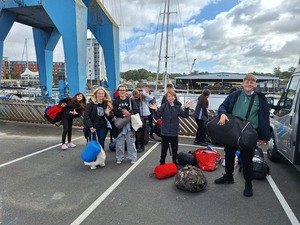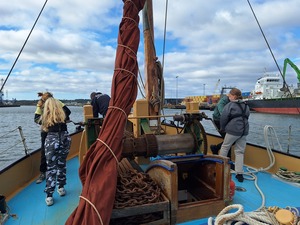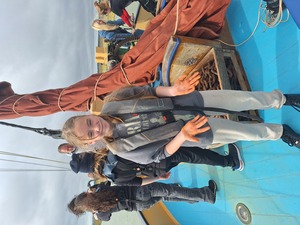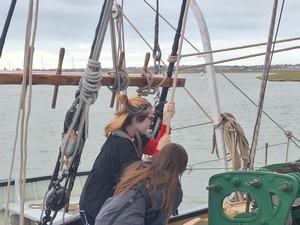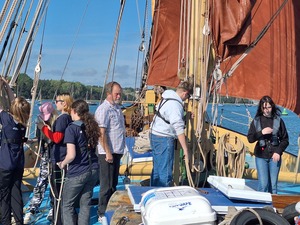
On 15 September 2025, ten Sea Cadets aged 11 to 15, accompanied by two adult volunteers, embarked on an educational voyage aboard the Thames Barge “Thalatta,” departing from Ipswich. Upon arrival, comprehensive safety briefings were provided, including detailed instructions on the correct use of lifejackets, and all procedures were carried out efficiently despite some initial apprehension. The participants then proceeded to the deck for introductory instruction covering the barge’s rigging operations and associated terminology.
Given the Barnsley Sea Cadet Unit’s considerable distance from maritime environments, most cadets had limited prior knowledge or expectations regarding the operation of a working vessel and life at sea. That evening, cadets settled into traditional naval hammocks assigned for their accommodation, with several remarking on the comfort provided.
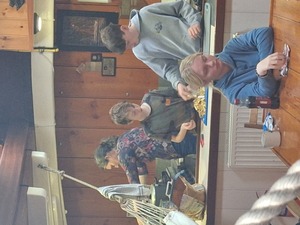
Under volunteer supervision, cadets were organised into two teams and assumed responsibility for meal preparation and cleaning duties during the voyage. The programme was designed to achieve multiple outcomes:
· Foster team spirit and enhance group cohesion
· Promote collaboration toward shared goals
· Develop personal accountability and ownership of designated tasks
· Encourage overcoming individual challenges and demonstrate peer support
· Emphasise both individual and collective safety
· Strengthen interpersonal skills through communal living
Participants acquired practical competencies in seamanship, basic navigation, tidal calculations, and map and chart reading. Instruction included the fundamentals of grid referencing, interpretation of weather information, understanding shipping forecasts, principles of motion and forces (including assessments of journey speed and directional changes), and engineering concepts such as employing winches and pulleys for sails, anchors, and leeboards.
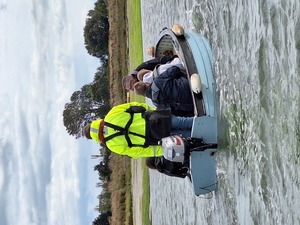
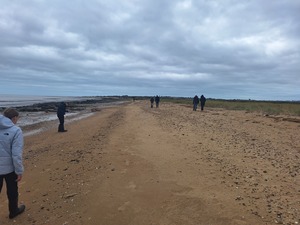
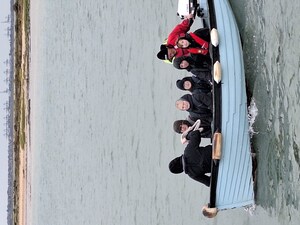
Environmental education formed an integral component of the curriculum, focusing on climate change and its effects on the East Coast. Activities involved fieldwork in coastal marshes to investigate soil erosion and preventative strategies, with access facilitated by small dories equipped with outboard motors. Wildlife observations during the trip included seals, fish, jellyfish, and seabirds.
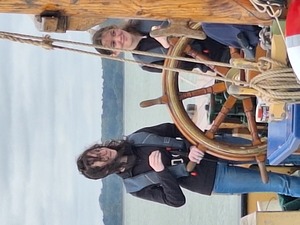
A further objective was to improve retention within both the Sea Cadet Corps and the local unit, thereby enriching the cadet experience. Under continuous adult supervision, cadets functioned as the operational crew and participated actively in all shipboard responsibilities. Evenings were dedicated to teamwork exercises and maintaining logbooks.
The route encompassed navigating the River Orwell past Felixstowe and Harwich, with an overnight mooring at Harwich during the return leg. On the final morning, the Trinity House vessel Victoria acknowledged the cadets’ contributions to sail management and steering by sounding multiple whistle salutes.
Tasks such as lifting the anchor, rigging sails, tying knots, and maintaining the vessel to high standards proved demanding; combined with exposure to sea air, these activities contributed to restful sleep for all participants each night.
At the conclusion of the week-long voyage, cadets were invited to reflect on their learning, achievements, and future aspirations. Universally, they commented positively on completing seamanship tasks including knot tying, steering, and daily meal preparation, though most were less enthusiastic about cleaning the heads (toilets). Several cadets expressed surprise at the challenge and enjoyment of their responsibilities, with one remarking, “I had no idea that being on a boat could be so much hard work yet fun at the same time.”