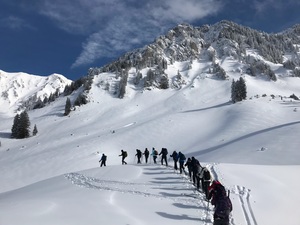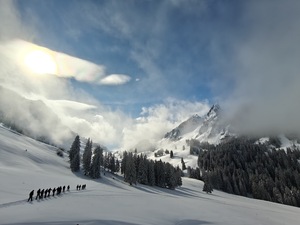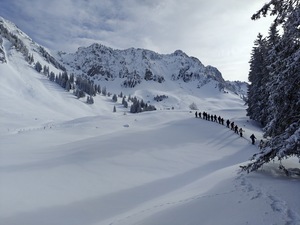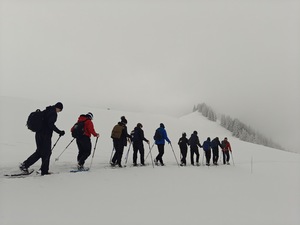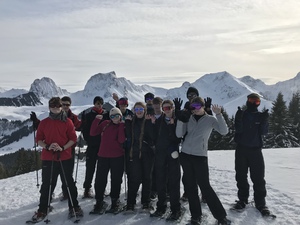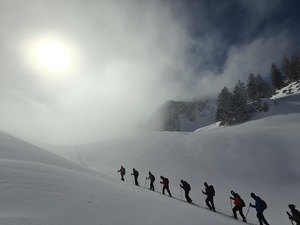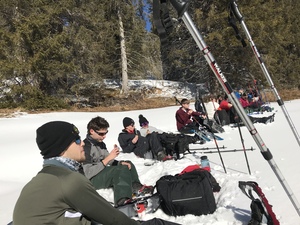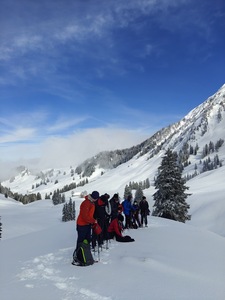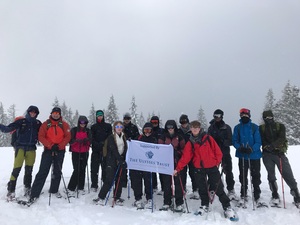
In February 2026, twelve cadets and four adult volunteers from Matravers School Combined Cadet Force travelled to the Swiss Alps for a week-long winter expedition that none of them will forget. Based in the lakeside village of Schwarzsee, the group undertook a progressive programme of snowshoe trekking, avalanche awareness, environmental education, and mountain resilience training. For many, it was their first time in the Alps — and for several, their first time leaving the UK.
Thanks to the support of The Ulysses Trust, young people who would otherwise never have had this opportunity were able to challenge themselves in one of Europe’s most inspiring landscapes, developing confidence, curiosity, and a deep connection to the natural world.
Objectives of the Expedition
The expedition aimed to:
• Introduce cadets to winter mountain travel through snowshoeing.
• Build resilience, teamwork, leadership, and independence in a challenging environment.
• Support disadvantaged young people by removing financial and social barriers to overseas adventure training.
• Provide meaningful education in snow science, alpine ecology, and mountain safety.
• Foster personal growth through exposure to a new country and culture.
• Strengthen the cadet journey by helping young people understand the value of commitment and reward.
Participants & Location
• Cadets: 12 (11 Army Section, 1 RAF Section)
• Adult Volunteers: 4 (2 Army, 2 RAF)
• Qualified Instructors: Two full BAIML members, subject-matter experts in their field.
• Dates: 12–18 February 2026
• Location: Schwarzsee & Gantrisch Nature Park, Canton of Fribourg, Switzerland
The group completed several progressive snowshoe routes, including the Selibuel Winterwanderweg, Gantrischli, Euschelpass, La Patta, and Schwyberg trails.
Preparation & Planning
In the months prior to departure, cadets undertook fitness sessions to ensure they were prepared for the expedition. Funding sources were sought from the Ulysses Trust, CCFA & Wessex RFCA to minimise the impact on our most vulnerable young people. These efforts significantly reduced financial barriers.
“Wow what amazing news! That’s fantastic, thank you so much for letting me know, I’m very grateful for all your hard work in securing funding support. This is so, so kind of them!”
A parent
Behind the scenes, the team completed extensive planning including risk assessments, medical plans, route reconnaissance, and safety system reviews. The expedition was led by Lt Col Fairnington, International Mountain Leader, supported by a freelance IML and the CCF’s trained adult volunteers.
Impact on Individuals and the Group
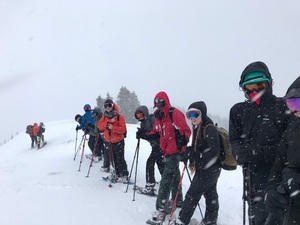
Developing Confidence and Resilience: Every participant faced new and unfamiliar challenges: deep snow, steep inclines, cold temperatures, and long days on their feet. Early anxieties soon gave way to newfound confidence.
“At the start I was terrified of slipping on the steep snow slopes, tripping over my snowshoes or catching my hair in a tree. By the last day I was at the front of the group leading the way, completely comfortable with where I was. I didn’t think I’d ever do something like this if it wasn’t for cadets.”
Cpl L
Her growth exemplifies how structured outdoor challenge can transform a young person’s sense of capability.
Snow Science
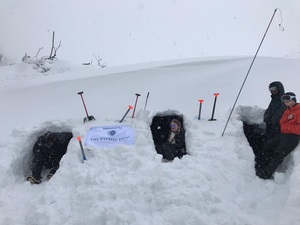
Understanding the Snowpack: One of the most memorable learning experiences was analysing the snowpack layers during the avalanche-safety day. Cadets dug snow pits and examined how snow accumulates and changes over time:
• soft, recent powder layers
• compacted wind crusts
• icy melt–freeze layers
• weak “sugary” depth hoar crystals
Understanding how these layers fail helped cadets grasp how avalanches form.
“Seeing the layers in the snow made me realise how important every decision is in the mountains, I didn’t realise it was so complicated and scientific. I just took snow for something we occasionally see, once a year at home.”
Lance Corporal M
Alpine Ecology
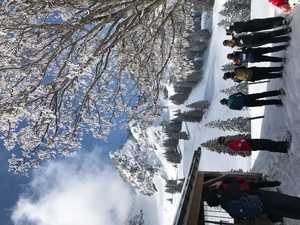
Meeting Ancient Survivors: As the group moved between forests and open slopes around Schwarzsee, instructors introduced key alpine tree species such as silver fir, Norway spruce, and stone pine. Cadets learned how each species adapts to harsh winter conditions:
• Silver fir thrives in shaded slopes and deep snow.
• Norway spruce has drooping branches designed to shed heavy snowfall.
• Stone pine survives extreme cold through dense wood and long needles.
Cadets were fascinated to learn that coniferous trees evolved millions of years before deciduous trees. Originating in the late Carboniferous period, conifers dominated prehistoric forests long before broadleaf species emerged. This made Schwarzsee’s forests feel like a living connection to Earth’s ancient past.
“I didn’t know trees like these existed before the dinosaurs. It made the whole place feel more relevant and historical — like we were understanding evolution through existence.”
Cpl C
Understanding this deep time perspective enriched their learning in both ecology and evolution, linking classroom science to the environment around them.
Emerging Leaders & Personal Breakthroughs
Life in Chalet St Michael required responsibility, discipline, and teamwork. Cadets managed early starts, food preparation, kit drying, and route logistics — all of which strengthened their independence.
During the ascent along the Schwyberg ridge, a cadet who has some personal barriers to their learning and sometimes lacks the confidence needed had this to share.
“It was really challenging, especially with the wind and the snow in your face, I’m glad I pushed through the challenge and feel more belief in myself.”
Cpl Y
Teachers have since noticed increased confidence and engagement back at school — a direct and lasting impact of the expedition.
Key Achievements & Memorable Moments
• Mastery of essential winter skills including snowshoe movement, layering systems, and avalanche transceiver checks.
• Completion of five progressively challenging alpine routes.
• Breakthrough moments for disadvantaged cadets who had never travelled abroad.
• Visible improvements in leadership, teamwork, and communication.
• Identification of emerging junior leaders for future CCF responsibilities.
• Deep scientific learning through direct engagement with snow science and alpine ecology.
Perhaps the most striking moment came on the Euschelpass trail, when the group paused to look back across the valley and mountains they had journeyed through.
“I didn’t believe I’d ever be in this sort of place, it makes me believe I could travel independently.”
L/Cpl G
Overall Benefits
For Individuals
• Improved confidence, resilience, and self-esteem
• Real-world scientific learning in snowpack analysis and ecology
• Increased cultural awareness and global perspective
• Strong personal achievement and motivation
For the Group
• Increased trust and camaraderie
• Shared challenge creating strong bonds
• Enhanced leadership and mutual support
For the Unit
• Development of future young leaders
• Strengthened credibility for future overseas expeditions
• Increased enthusiasm for adventure training across the contingent
• Reinforcement of our vision: helping cadets understand the value of commitment and reward
The expedition has already inspired more cadets to pursue the Duke of Edinburgh’s Award, cadet qualifications, and future mountain expeditions.
Staff Development & Expedition Leadership
The expedition also significantly strengthened the skills, leadership capacity, and professional development of the adult volunteers. Operating in an alpine winter environment demanded high levels of coordination, technical understanding, and adaptability.
Under the guidance of International Mountain Leaders, staff developed deeper expertise in:
• Avalanche safety delivery — including transceiver checks, snowpack analysis, and hazard recognition.
• Group management in challenging terrain and varied snow conditions.
• Environmental instruction, confidently teaching alpine ecosystems, snow science, and the ancient origins of conifers.
• Dynamic leadership, responding to changing weather, route conditions, and individual needs.
“Working alongside experienced professionals gives me the confidence to take on more responsibility. I feel far better prepared to lead future expeditions and to qualify as a Mountain Leader.”
Lt Paginton
Regular morning and evening debriefs ensured the staff team understood the decision-making involved in maintaining safety, safeguarding well-being, and balancing challenge with support.
This growth in staff competence strengthens the long-term resilience of Matravers CCF. With newly developed skills across the team, the unit is now better equipped to plan, manage, and deliver ambitious future expeditions — both overseas and within the UK. It also ensures that high quality adventure training becomes more sustainable and widely accessible to the cadets who need it most.
Conclusion
Exercise Matravers Schwarzsee Snowshoe 2026 was a powerful and transformative experience for every young person involved. It combined physical challenge, environmental education, cultural exposure, and personal growth. Many cadets overcame boundaries, discovered new strengths, and gained a lasting appreciation of the natural world — from ancient conifer forests to the layered complexity of the alpine snowpack.
We are deeply grateful to The Ulysses Trust for enabling this life changing opportunity. Your support opened the mountains not only to those who could easily access them, but to those who needed this experience the most.