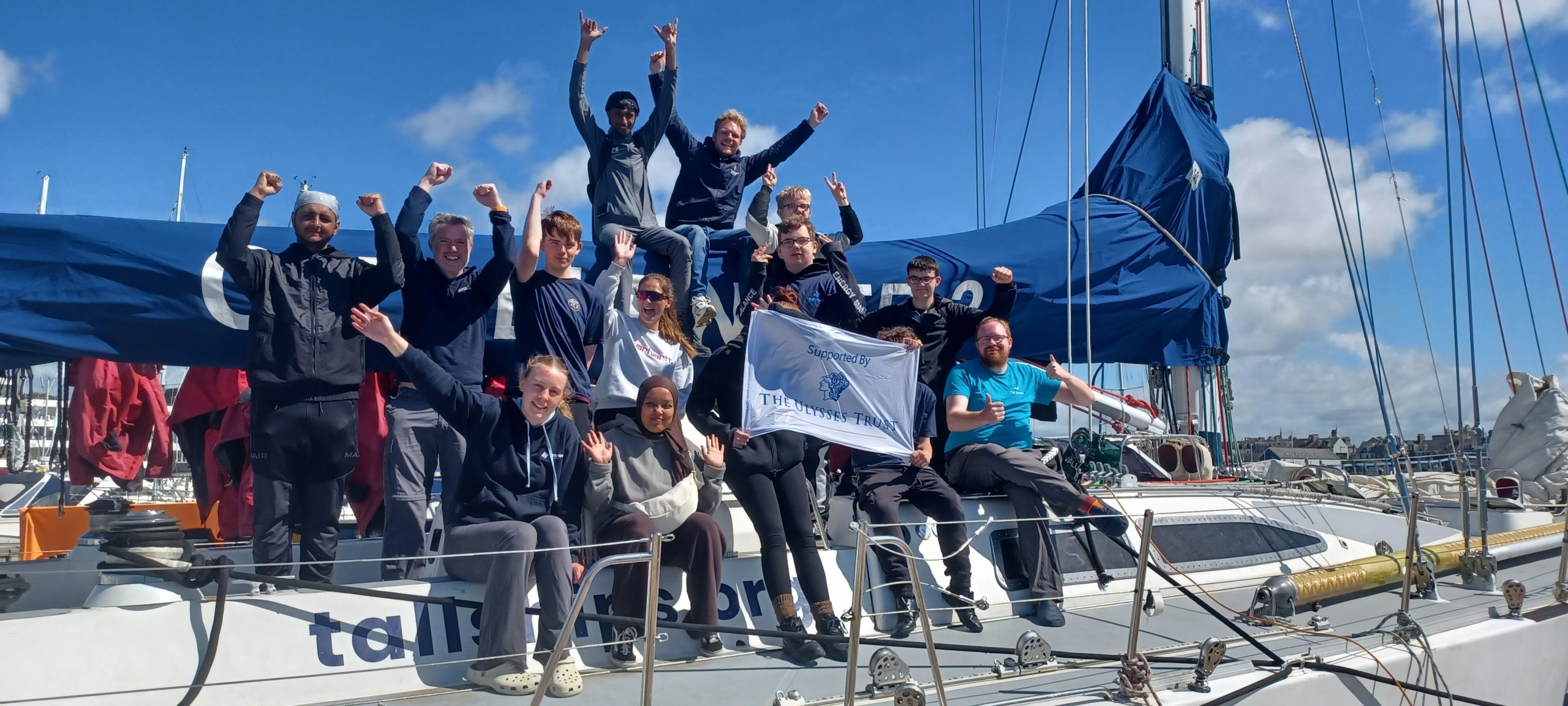
1st June 2026: 8 cadets, myself and a fellow member of staff travelled to Plymouth to start our 5-day adventure on the Challenger 2 yacht. We were in good spirits despite the forecast; our cadets were not going to be put off by a little rain! On entering the ship, the cadets were split into two teams (green and red watch) and, with guidance from the crew, started preparing the ship for sail. One of our students suffered with sea sickness as soon as he boarded and I was then put under pressure to make a decision on sailing or staying in harbour. I was informed by the skipper that wind gusts were forecasted to reach 39 knots, that the seas would be rough and that we would be sailing into the wind. Our cadets however were determined and after a brief discussion and learning how we could indeed sail into the wind, a process called “tacking” we decided that we would leave harbour, head to Fowey, then to Falmouth and then sail, with the wind behind us back to Plymouth in a day. Although at the time, we were concerned about our sea-sick cadet, I later learned that we would not have left harbour at all if wind gusts reached 40 knots.
2nd June 2026 – The first day at sea: Sailing to Fowey, pushed our cadets to their limits, presenting a mental and physical challenge unlike anything they had ever experienced. Above deck, they mastered the technical skills required to operate a yacht—from deck preparation, stowing ropes and fenders, engine checks and hoisting sails. Below deck, the challenge was equally demanding; the cadets had to work cohesively in tight quarters to keep our restricted living space clean and ensure the entire crew was well-fed. All this was done while the boat sailed up huge swells with waves crashing over the deck. Nearly every cadet, including myself and the adult crew suffered from sea-sickness. Surprisingly, our worry over our cadet who was sea-sick in harbour was ill-founded. He had gained his sea legs and was an inspiration, putting in the extra effort for his teammates while they were down! If he could overcome his sea-sickness, we all could!
3rd June 2026 – Sailing from Fowey to Falmouth: Seas were even rougher, but our cadets and our staff had found their sea-legs. The cadets knew what they needed to do and many of them took the helm. The ship leaned heavily into the winds as it skipped along the waves. The boat leaned over up to 45º creating a low side and a high side. Cadets learned how to move about the yacht, swapping to the high side each time the yacht tacked into the wind. At times the low side would disappear under water. After a successful day we were prepared to enter harbour, the sail was stowed and the engine was fired up to take us to our mooring.
Then DISASTER! The engine broke with a clang and heavy smoke and the crew set about making repairs. The seas were still rough and our cadets did their best to support. One of our cadets became a rudimentary mechanic helping to replace the broken part and passing down tools to the skipper to make his repair. The engine was brought back to life and harbour was reached as light was fading. Our cadets were exhausted but happy.
4th June 2026 – Sailing from Falmouth to Plymouth: Although we had to cover twice the distance of our first two days, we had to set out a little later than usual as spare parts needed to be purchased. This allowed us to visit Falmouth to do some sight seeing. On returning to the yacht, we made rapid progress. We had the wind to our backs and we were sailing with the waves. Possibly the highlight of the adventure was when a pod of dolphins joined us, with the cadets whooping each time they jumped out of the water; also, for the first time, the sun made an appearance. We made it into Plymouth harbour in good time, exhausted but exhilarated.
5th June 2026: After tidying kit away and cleaning the boat, we reflected on our expedition. We felt it was a profound triumph, fostering resilience, self-esteem, and independence as the cadets tackled every challenge with enthusiasm and newfound confidence. It was inspiring to watch them eagerly volunteer for tasks and share knowledge to form a truly efficient team. Given that our cadets navigate additional needs—including Moderate Learning Difficulties, Autism, and communication challenges—seeing them connect so confidently with peers and strangers in an unfamiliar environment was inspiring. Coming from an inner-city school, this trip represented a rare, and perhaps unique, opportunity for them to experience a once-in-a-life adventure.
“The whole crew were so helpful in answering all my questions and guiding me as we raised the sails and operated the winches. The Skipper even taught me how to drive (steer) the boat. It has given me the confidence to try new things. I’m now looking into joining the Royal Navy, I would do this again as a volunteer to help other people get the same experience.”
CCF cadet
This trip stands as a crown jewel in our CCF calendar and perfectly showcases the extraordinary, life-changing opportunities only made available to us through the Ulysses Trust. Our heartfelt thanks go to the Ulysses Trust; your support made this expedition possible, creating a standout life experience that these young people and I, will cherish for the rest of our lives.