
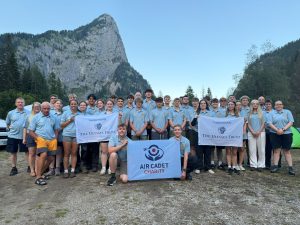
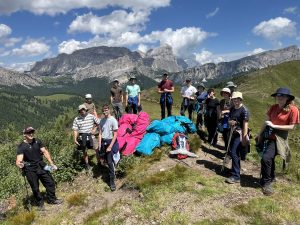
Between 12 and 25 July 2026 some 28 cadets and 12 staff from Trent Wing travelled to the Marmolada Region of the Dolomites in Northern Italy to complete Gold DofE Expeditions thanks to the generous support of the Ulysses Trust, RAF Charitable Trust and the Air Cadet Charity.
Following a competitive selection process, the 28 cadets had been selected, trained and split into 4 teams, and were combined into two tranches travelling 4 days apart (12 – 21 July and 16-25 July) so the environmental impact was reduced by only having two teams in the mountains at a time, as well as being able to maximise the supervision from the staff team. The main aim of the expedition was a 4-day expedition route linking a number of significant sites from the battles between Austrian and Italian troops in WW1 including a summit of the 2420m peak of Col di Lana and a wild camp by Lago Fedaia with a via feratta experience after the expedition phase on the Col de Bois.
The flights out were painless despite the recent changes in entry visas but, on arrival in Venice, things changed with the hire minivans that had been booked and paid for in advance not available until Monday morning. This meant the staff going into a tabletop leadership exercise to work out how to get the tranche to Marmolada Campsite 2.5 hrs away – a combination of two cars we were given, some staff and cadets travelling by train to Belluno and the support vehicle that had travelled from the UK doing shuttles from the train station meant it was very late before all personnel arrived on camp.
The second day in country was a planning day, albeit with a later start, so whilst most of the staff returned to the airport to collect the now available minivans, the teams with the remaining staff sorted group kit, plotted the routes on the maps and did the expedition phase shopping, with the challenges of dealing with a small local supermarket, foreign language on packaging and currency conversions to work with to remain in budget.
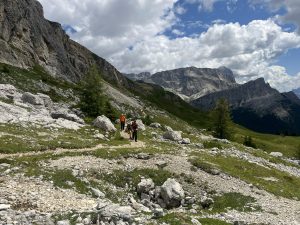
Finally, the teams were ready to go with Day1 of the expedition being the Col di Lana summit day, the highest point of the expedition at 2420m. The teams started from Lago Valporola following a well-trodden, albeit boggy in places route to take the main path below a huge rockface dotted with climbers on sport routes. Eventually, the teams came to a mountain refuge where they could take lunch and met up with the staff supervision team who then ensured we didn’t select the wrong path on to Col di Lana as this would mean wandering onto a via ferrata.
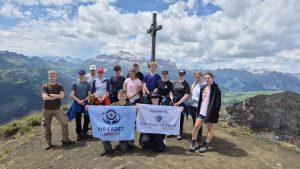
At the southern point of the summit spur, the teams stashed their main kit and did the 2520m climb to the summit with waterproof jackets, snacks and drinks. The view from the summit was stunning with a 360-degree vista right back to the campsite at Marmolada and included memorials, another refuge and even a church. Apparently, the site changed hands on several occasions during the conflict and held huge significance. Having recovered their full kit, the teams took a steep zig-zag path to join a lower path through a forest to the finish at the ruins of Castello di Andraz.
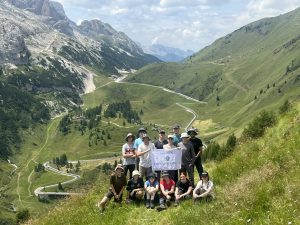
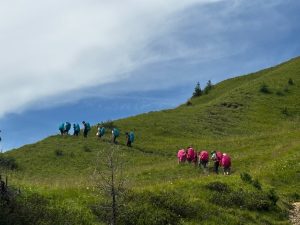
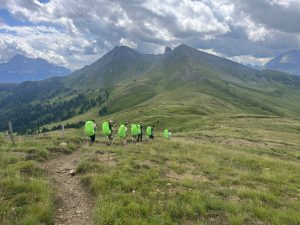
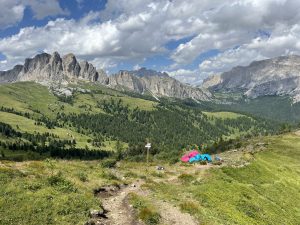
Day 2 of the expedition saw the teams climb a steep unmade road which served as an access route to get to the two Refugios at Col di Mesdi from where the route took a pleasant undulating path through pine forest and Alpine Meadow to reach the steep path from Davedino to Passo El Jof which afforded the teams unbelievable views on to the Marmolada Glacier and Lago Fedaia. The teams negotiated a steep descent to the road for a welcome water top up before climbing to the path that runs alongside Lago Fedaia where they reached their “wild campsite” beneath the north dam wall.
Day 3 started with a steep climb from wild camp up a zig zag path to the ridge line en route to the Gondola station for the Peak of Padon where there was an old artillery gun still set into the hill. After taking an extended break for the views the teams contoured around the southern edge of Padon following the ridgeline back to Passo El Jof where again they descended to the road bout this time they tuned left and followed the line of the ski runs south back to Marmolada campsite.
Day 4 meant following the path from the campsite through a stunning gorge with lots of history including deserted ammunition stores and quarters for troops and following the river that flowed through the campsite to finish on the suspension bridge outside Caprille. From here the teams were collected by vehicle and returned to camp where thanks to an early start they had enough time to catch the Marmolada Gondola up to the “Ice Fortress” and museum which had no end of history on the significance of the area to the Italians in the conflict – literally dug out of the rock and ice the fortress lost more soldiers to cold and falls than enemy action.
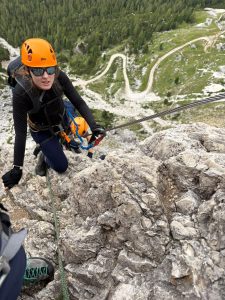
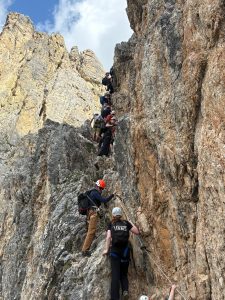
The last day of AT saw another early start to meet hired local guides at Passo Falzarego – the start of the Col de Bois via ferrata – a 500m climb after a 45 min walk in with some exposed sections testing the individual nerve and teamwork of the cadets. The route was of particular interest as it is also known as Degli Alpini and although newly installed in 2008 it follows the original route put in by the Italian Mountain Troop to train Italian Soldiers in the technique and even includes the remains of a WW1 field hospital which is currently being restored to be a museum at the start / finish point.
After an end of expedition meal, each tranche moved back to Venice to a campsite near the airport to make logistics easier for flight home and give the participants the opportunity of half a day in the famous city of Venice and all the history that goes with it.
Despite the challenges of the transport, all of the expedition objectives were met with all 28 cadets completing the expedition phase for their Gold award and on returning home will be working hard to finish off their other sections to gain their prestigious Gold Award.
Expedition Leader Flt Lt Dave Hill said:
“The expedition gave the staff and the cadets huge opportunities for personal skills development, especially given the additional logistics challenges from the transport issues. Working in a foreign culture, currency and language made the teams work together to achieve their goals and with a very challenging route (700-900m of vertical ascent on days 1-3 whilst at altitude) it stretched the teams physically and mentally and they thoroughly deserved their outcomes which will hopefully serve them well in life as well as enabling them to gain a first class and recognized vocational qualification.”
Cdt FS G said:
“The expedition was incredibly rewarding with the most amazing views throughout but really tough and stretched us to our limits. At first, I was happy to skip the via ferrata, a combination of tiredness and apprehension but with the staff “actively encouraging “us, I went ahead with it and for sure would have regretted it had I not – the feeling of exposure but feeling 1005 safe was exhilarating and probably the best thing I have done in cadets.”
The Ulysses Trust also wish to thank the generosity of the Royal Air Force Charitable Trust for supporting this expedition. www.rafct.com