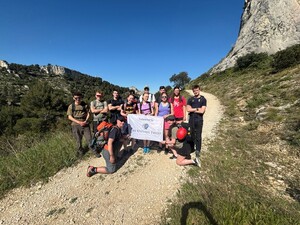
“The past week has been an incredible experience and surpassed all my expectations. I didn’t know what I was getting into but I didn’t expect to enjoy it so much. Being outdoors for a week, having a break from university and a digital detox was invaluable. I learn much more than the technical skills of rock climbing. There are many lessons that I will take back with me. It showed me I have to trust in myself, my equipment and the people around me. I constantly surprised myself in what I achieved and showed myself I was capable of more than I thought I was. I hope to carry on climbing as much as possible in the future.”
Introduction: Exercise Cadet Grimpeur was an overseas Adventure Training (AT) exercise organised by Highland Officers Training Regiment (HOTR). The exercise took place in the Orgon region of Provence, France as a Type 3 Rock Climbing Expedition, conducted over 5th -24th April 2026. The event was open to all OCdts and staff across Aberdeen and Tayforth Officer Training Corps.
Aim: The aim of the exercise was to deliver foundation level training for personnel who were not qualified but also to provide continuation training for those already qualified at foundation level. Ex Cadet Grimpeur formed part of a longer-term development plan which contributed to the overall Regimental ALeRT plan.The exercise also helped promote rock climbing activities within the regiment and allowed specific training for the regimental climbing club. The exercise also aimed to provide opportunities to foster team work and encourage the development of leadership, physical fitness and emotional resilience.
Planning: Although initial planning began in November 2025, uncertainties over budget constraints resulted in actual planning only being able to commence eight weeks prior to departure. On completion of the initial outline plan for the event, the JSATFA process was started and the relevant political clearances applied for. All unit personnel were eligible providing they were fit to attend. The initial planning figure was for the overall exercise was for 24 officer cadets. 18 officer cadets and one FTRS SNCO completed the RSF course and five officer cadets participated in continuous training. The instruction for the exercise was delivered by two HOTR rock climbing instructors (JSRCI) and on guest JSRCI from East Midlands UOTC. All officer cadets attended for one of the two weeks during the exercise.
Travel: The travel plan consisted of an advance party of 2 pax in the unit combi van taking all camping and climbing equipment across by the Dover to Calais ferry. The two main bodies consisted of the remaining two instructors and fourteen officer cadets on week one and ten officer cadets on week two. All flights were from Edinburgh to Marseille Airports. Three Renault Traffc Minibuses were booked for the duration of the exercise. Unfortunately, due to flight times, the Enterprise car hire desk was closed upon arrival and group one had to get a taxi from the airport to the campsite in Orgon. The hire vehicles were collected the following evening after climbing activities.
Communications: Personal mobile phones were used where required during the event. A Signal group was set up prior to the exercise and this proved valuable for communicating between groups. There were some geographical areas which provided issues with mobile signal, however most networks were covered in both climbing locations utilized.
Accommodation: The accommodation for the event was located in the campsite on the edge of the town of Orgon, which had a large supermarket and several take-aways, bars and cafes. It was possible to walk from the campsite to Orgon in around 10 minutes. Three pitches at the campsite were booked, which provided ample room for all eleven tents. Facilities were excellent and included a bar, restaurant and swimming pool. Toilets and showers were excellent and cleaned every day by campsite staff. The only negative aspects of the campsite was the lack of a communal kitchen and the camping surface, whch was extremely hard and rocky, which required extra heavy duty pegs to be purchased.
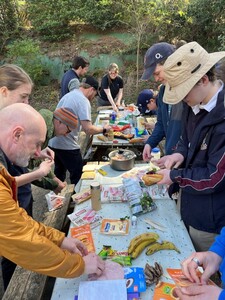
One staff member brought a family tent, which was utilised for one evening meal due to inclement weather. The participating officer cadets organised themselves into food groups and took responsibility of budgeting, shopping and cooking for a twenty-four hour period. This provided excellent opportunities for transferrable skills and resulted in an excellent standard of meals. Daily reviews were held utilising Roger Greenaway’s Active Reviewing model – the 4 Fs (Facts, Feelings, Findings and Futures), which promoted reflective thinking within the group and added to the experience of each day.
“Throughout the week I picked up so much knowledge from Chris and the other instructors. The climbing skills will be extremely useful but the transferable skills are invaluable. Through the reflection sessions each night I thought about what I had learned or struggled with that day and it also made me realise that the problems I was facing on the wall require the same solutions to the problems I face daily. I now have the ability to take myself climbing on my own but also have new realised areas to improve in my daily life. It was a thoroughly enjoyable week and I will definitely sign up to anymore AT opportunities that present themselves.”
It was necessary to purchase take-away pizza on one occasion due to running out of camping gas, which was unavailable to purchase on a Sunday. Most shops are closed on Sundays and even supermarkets and bakeries close around 13.00.
Equipment: Due to previous rock climbing exercises and the formation of a regimental climbing club, it was not necessary to apply for loan pool stores. The regiment also holds a reasonable amount of tentage, so there was sufficient camping equipment for the duration of the exercise.
Weather: The Provence area is well known for having warm, stable weather, but can be affected by the Mistral winds. Most daily temperatures at their highest were around 25 – 28 degrees Celsius. Climbing above the tree line proved quite challenging in the heat, so climbing locations in the shade were sought, especially for climbing in the afternoon. The Mistral did affect the weather overall in the middle of the exercise. However, the RSF course included an indoor climbing session and the Indoor wall in Avignon provided shelter from the wind and rain. The remainder of the climbing elements were done carried out in dry, stable conditions.
This course significantly contributed to unit cohesion in a way that typical training cannot successfully achieve; additionally, the technical skills garnered contribute to maximizing individuals’ general capability and strengthen their state of mind to undertake future endeavours.
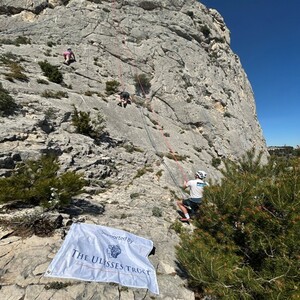
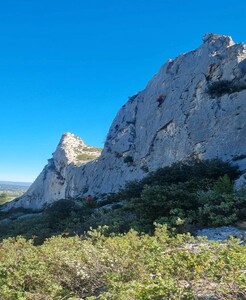
The campsite in Orgon provided an excellent location with good climbing crags all within a 15 minute walk of the campsite. There were numerous areas for single pitch climbing and a few crags had two-pitch routes, but these were not utilised. Some more popular areas had quite polished rock and access to the top of crags was generally difficult due to the nature of the rock and the popularity of sport climbing in the area. Limestone does not generally lend itself to traditional climbing and is more suited to sport climbing on pre-placed bolts, however the climbing area of Acteur’s Studio allowed opportunities for the placing and removal of traditional climbing equipment, which was included in the RSF syllabus. The Rockfax guidebook France: Languedoc-Roussillon was utilised for climbing in the Orgon area.
Around a forty-five minute drive, situated in the village of Rochefort-du-gard, is a climbing area known locally as Roca Fortis, (due to the close proximity of a nearby fort). This climbing area was visited on one of the days of both weeks of the exercise. A local climbing guidebook has been produced for this area, but it was not possible to acquire this, despite visiting several of the local climbing stores. Information was available on the UK Climbing website, detailing the names of the routes and a map on the website allowed navigation from crag to crag. The climbing areas are very well signposted from the car park opposite the fort on the Eastern edge of the town and once at the crag, some of the routes have identification markers, naming the route. This allowed climbing using the route names on the rock and the UK climbing website (www.ukclimbing.com) to identify nearby routes and grades. This area is well worth a visit and provides an excellent range of climbs over various grades from beginner to more advanced intermediate.
The indoor wall was used for all three RSF courses as this was a necessary part of the syllabus. The indoor wall in Avignon, Vertical Park – Salle d’escalade a Avignon Le Pontet is an excellent facility which has everything required for indoor climbing, including bouldering, bottom roping, auto-belays and a small speed wall. Lead climbing is possible on most bottom roping lines and all routes have quickdraws in-situ. It is not necessary to bring a rope as the wall allows all of its bottom ropes to be used for lead climbing. The cost was around 15 Euros for a session with a small discount being possible by purchasing a book of ten tickets, which brought the price down to around 12 Euros per person. The indoor wall was situated in a retail park, which had a large outdoor store (Decathlon) next door.
19 exercise participants successfully completed the RSF course; eighteen OCdts and one FTRS SNCO, who also participated in five days of continuation training. Five officer cadets who were already RSF qualified participated in continuation training and gained valuable log book experience in an attempt to gain enough experience for them to progress to the next level of the Rock climbing scheme
Conclusion: The area selected for Exercise Cadet Grimpeur was known and was purposely chosen for having warm, stable weather conditions, which would be necessary for the time of the year. The campsite proved to be appropriate, but also caused challenges in relation to cooking, due to having limited facilities and for having meetings with the whole group. However, it was comfortable, had reasonable phone signal, a small heated swimming pool, bar, restaurant, good showers, washing machines and was central to the climbing areas and supermarket. One large family tent was taken which allowed eating inside as a whole group on the one occasion when the weather turned inclement. Otherwise, all meals were taken outside on the picnic tables provided at each camping pitch. The weather for the duration of the exercise was generally excellent and did not affect climbing activities..
All-in-all, the exercise was a success without incident (except a few scrapes from falls). It promoted an interest in rock climbing within the unit, but also fostered a teamworking spirit and promoted pro-social co-operative living. Several of the cadets still had a few years at university and those all expressed an interest in attending the Rock Climbing Supervisors course and attending future expeditions The unit set up a rock climbing club in 2025 and intends competing in sports climbing competitions in the future. Ex Cadet Grimpeur promoted this and hopefully the skills learned over the duration of the exercise will produce some positive competition results.
“This trip gave me the opportunity both to push myself out of my comfort zone and to get to know fellow OCdts and staff in a more relaxed setting. All in all, it was a fantastic experience and a testament to the concept of adventurous training.”