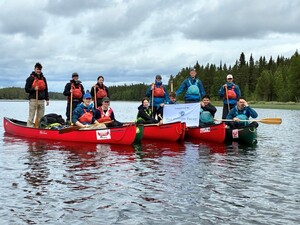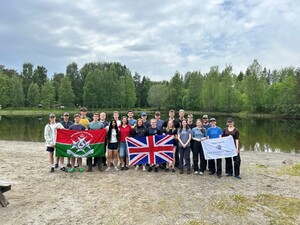
Between 19 and 26 June 2026, nine students from East Midlands Universities Air Squadron (EMUAS) joined three students from University of Birmingham Air Squadron (UBAS), accompanied by an instructor from each squadron, for Exercise Harkan Ways in Jämtland, central Sweden.
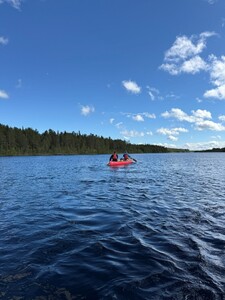
The expedition was designed to develop leadership, resilience and self-confidence through a self-supported canoe journey across the lakes and rivers of central Sweden. Living from canoes and sleeping in the wilderness, participants were responsible for every aspect of daily life, from bushcraft to preparing meals and managing equipment.
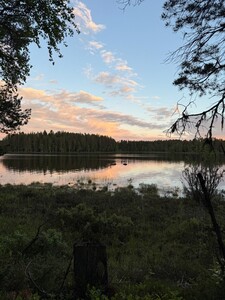
After an early start, students travelling from both squadrons met at Gatwick Airport before flying to Trondheim, Norway. From there, a four-hour coach journey crossed into Sweden, with a supermarket stop providing the first glimpse of Scandinavian life—and the opportunity to stock up on snacks before continuing to the campsite at Lit. After settling into accommodation, the team enjoyed a meal together in the nearby village pizzeria before experiencing one of Sweden’s most memorable summer features: the almost endless daylight of the midsummer period, which proved challenging for anyone without a sleep mask. The only drawback was the relentless mosquitoes. Whenever students were outside their bivvies, mosquito head nets quickly became essential, whilst loose-fitting clothing covering all exposed skin offered the best defence against the persistent insects. Despite the nuisance, it became just another part of adapting to life in the Scandinavian wilderness.
Preparation day focused on ensuring everyone was ready for life on the river. Students paired up into canoe crews, checked and packed equipment, organised communal food supplies and prepared the canoes for launch. The timing coincided with Sweden’s Midsummer celebrations, meaning local shop opening hours differed from expectations and required some flexibility to the day’s plans. Despite the delay, the group completed preparations before enjoying the traditional Swedish custom of Fika—coffee and cake—prior to departing for the expedition start point.
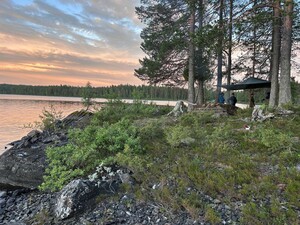
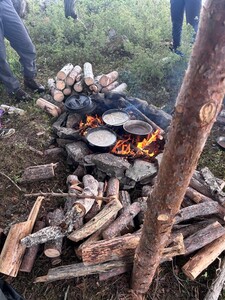
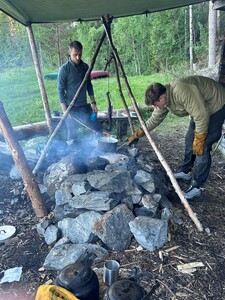
Weather conditions immediately reminded the team that Scandinavian wilderness can be unforgiving. Strong winds and persistent rain created challenging paddling conditions during the opening afternoon, slowing progress and demanding effective communication between canoe partners. The first wild camp was established beneath tarps and hammocks, with instructors introducing the group to Allemansrätten, Sweden’s famous “Right of Public Access”, which allows responsible wild camping throughout the countryside. Students also learned how to identify suitable deadwood, build safe campfires and organise themselves into rotating teams responsible for cooking, fire management and washing up.
Life quickly settled into a routine. Mornings began with porridge cooked over an open fire with the addition of bacon or haloumi on camp-made bread before camps were dismantled and packed into the canoes. Each day involved several hours of paddling interspersed with fishing stops, lunch breaks and portages around dams or rapids. The simplicity of expedition life encouraged everyone to appreciate the basics—good food, dry clothing and a warm fire becoming the day’s greatest luxuries.
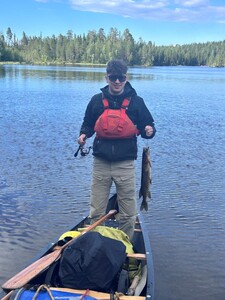
Fishing proved to be one of the expedition’s unexpected highlights. After receiving instruction on setting up rods and safe fish preparation, students quickly enjoyed success, with the first fish being caught on the very first cast. Over the following days several more fish were caught, filleted and cooked over the campfire to supplement evening meals, giving many participants their first experience of living off the land.
Heavy rain accompanied parts of the expedition, testing both equipment and morale. Waterproof clothing became a necessity rather than an option, while campfires beneath carefully erected tarps offered welcome opportunities to warm up and dry out after long hours on the water. Despite the weather, spirits remained high, with evenings spent around the fire sharing stories, toasting marshmallows and learning traditional outdoor skills such as bread making and wood carving.
One of the expedition’s most memorable days came when the group reached a series of rapids. After carefully assessing the water and receiving a thorough safety briefing, canoe crews descended individually under instructor supervision. Most successfully negotiated the feature, but one canoe became swamped before being pinned against submerged rocks and the force of the current. Despite determined efforts from the instructors, the canoe could not be recovered and had to be abandoned. The incident demonstrated the importance of decision-making, teamwork and adaptability in remote environments, with the remaining crews reorganising equipment before continuing the journey safely.
As confidence grew, so too did the team’s efficiency. Camps were established more quickly, cooking became increasingly well organised and paddling techniques noticeably improved. Lunch stops often became opportunities to experiment with the surrounding environment, including brewing pine needle tea and sampling edible wild plants under instructor guidance. Visits to remote fishing huts and countless peaceful stretches of river highlighted the isolation and beauty of the Swedish wilderness, whilst wildlife and expansive forests provided a constant backdrop to the journey.
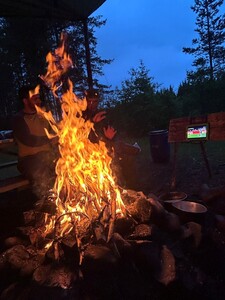
One particularly memorable evening saw the team gather around the campfire to watch England’s World Cup fixture using two iPads balanced on a makeshift wooden stand. With food supplies proving more than adequate, marshmallows, biscuits and sweets were shared as everyone enjoyed a small taste of home deep in the Scandinavian wilderness.
Excellent progress throughout the expedition meant the group completed the planned route a day earlier than expected, returning to the campsite ahead of schedule. Canoes were cleaned and stored, expedition equipment dried and repacked, and the final full day was spent exploring the nearby town of Östersund. Students made the most of the opportunity to visit museums, explore the lakeside, enjoy local restaurants and reflect on the experiences of the previous week before preparing for the journey home.
The return journey began in the early hours of the morning with a coach transfer back to Trondheim Airport before flights returned the group to the United Kingdom. Students departed for RAF Cranwell, RAF Cosford or directly home, bringing to an end an expedition that had challenged them physically and mentally while whilst developing confidence, resilience and teamwork.
Exercise Harkan Ways 2026 provided far more than a canoeing expedition. It immersed students in a demanding wilderness environment where success depended upon cooperation, adaptability and personal responsibility. Through unpredictable weather, technical canoeing, campcraft, fishing and living entirely outdoors, participants gained valuable leadership experience while creating friendships and memories that will endure long after returning home.