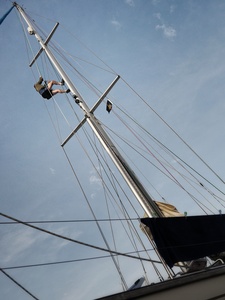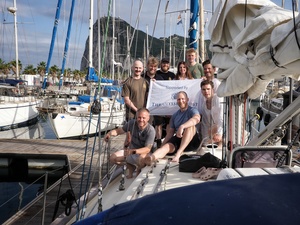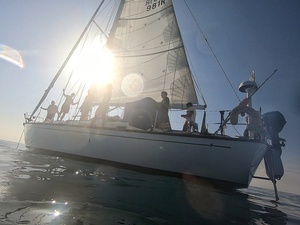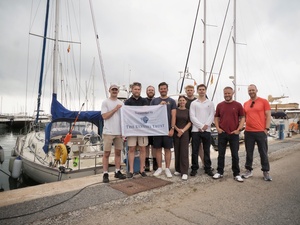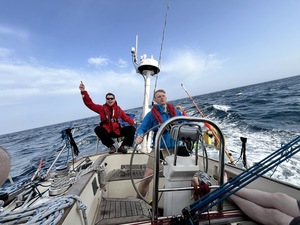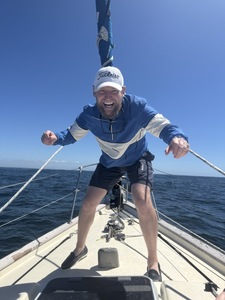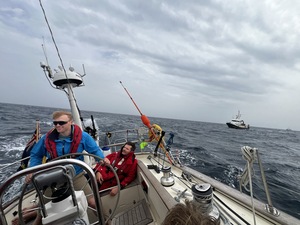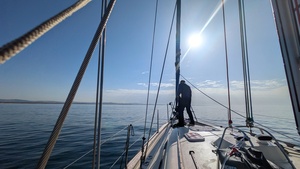
Between 18 April and 2 May 2026, a crew of nine embarked on a challenging two-week sailing expedition aboard the yacht St Barbara V, journeying from Vigo, Spain, through the Atlantic coast of Portugal, transiting the Straits of Gibraltar, and concluding in Málaga, Spain. This expedition combined seamanship training with cultural and historical exploration, offering participants a unique opportunity to develop leadership, resilience, and teamwork skills in demanding maritime conditions.
Expedition Overview: The journey began with the crew assembling in London and travelling to Vigo, where they familiarised themselves with the yacht and each other. Initial days focused on basic seamanship training, including knot tying, sail rigging, and manoeuvring within the marina. The crew quickly adapted to the confined living conditions aboard the yacht, learning to manage limited space and shared responsibilities.
The first major passage from Vigo to Cascais tested the crew’s endurance and adaptability. Many had little offshore sailing experience, and the North Atlantic’s rough seas caused widespread seasickness. Despite this, the crew demonstrated resilience, maintaining watch routines and contributing to sail handling under the skipper’s guidance. A hot meal prepared in difficult galley conditions notably boosted morale during this trying time.
Subsequent legs included stops in Cascais, Vilamoura, and Barbate, interspersed with shore-based cultural visits to Sintra, Lisbon, and Gibraltar. These visits enriched the expedition by providing historical context and broadening the crew’s understanding of British military heritage, particularly through exploration of Gibraltar’s Great Siege and World War II tunnels, and the local Barbary macaque population—an enduring symbol of British intervention during World War II.
The passage through the Straits of Gibraltar marked a significant milestone, with improved weather conditions allowing a successful transit and a celebratory meal ashore. The final days included a swim in the Mediterranean near Benalmádena and cultural activities in Málaga before the crew’s safe return to the UK.
Challenges Faced: The expedition was marked by persistent adverse weather, including high winds and rough seas, which limited opportunities for traditional sailing and seamanship training. The crew often had to rely on engine propulsion, which some found disappointing as it reduced hands-on sailing experience. A temporary loss of engine power due to fuel depletion further tested the crew’s resourcefulness and highlighted the importance of fuel management.
Living and working in close quarters for extended periods also presented social and logistical challenges, requiring rapid development of interpersonal skills and cooperation. The demanding schedule and physical strain, especially during overnight passages and rough conditions, tested the crew’s stamina and mental resilience.
Benefits and Impact: Despite these challenges, the expedition delivered substantial benefits. It provided practical leadership and resilience training in a real-world environment, fostering strong teamwork and discipline. The exposure to controlled risk at sea enhanced the crew’s confidence and seamanship skills, while the cultural visits deepened their appreciation of British military history and heritage.
The expedition had a positive impact on both the unit and individual participants. It strengthened group cohesion and morale, and the shared experiences forged lasting bonds among crew members. The opportunity to apply leadership principles under pressure contributed to personal development and operational readiness.
As one crew member reflected,
“This expedition taught me how to stay calm and focused when conditions are tough, and how important it is to trust and rely on your team. I’ve gained skills and confidence I didn’t expect.”
Conclusion: The Atlantic to Mediterranean sailing voyage was a demanding but rewarding expedition that combined seamanship training with cultural enrichment. It successfully met its objectives of developing leadership, resilience, and teamwork in challenging conditions, while providing participants with memorable experiences and valuable lessons that will benefit their future roles.