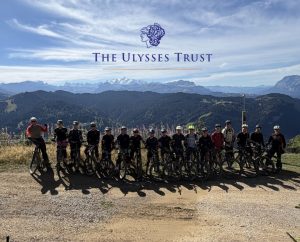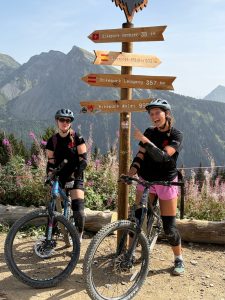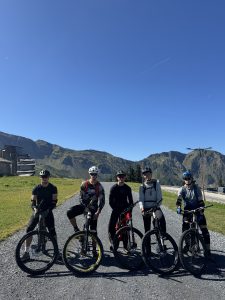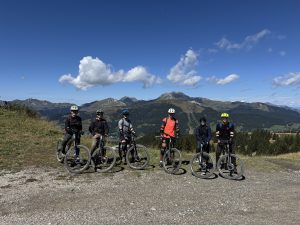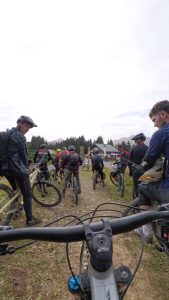
On 21st August 2026, a group of seventeen Officer Cadets from Wales UOTC deployed from Maindy Barracks, Cardiff to Chalet Hugo, Le Biot, France, for a week of mountain biking. The expedition provided an opportunity for OCdts to develop leadership skills, mental and physical resilience, and personal confidence, whilst encouraging them to operate outside of their comfort zones in a challenging environment. The differing levels of mountain biking experience within the group also provided an opportunity for each OCdt to set individual goals and develop at their own pace.
We are extremely grateful for the donations and support provided to the Unit by The Ulysses Trust. This funding enabled the expedition to make use of improved equipment whilst also helping to reduce the overall cost for participants. This had a significant impact on the accessibility and delivery of the expedition, allowing all OCdts to participate in a challenging and rewarding adventure training package. Ultimately, the support provided helped create an experience that may otherwise not have been possible for all members of the group.
On the first day of mountain biking, all OCdts travelled to Avoriaz, where they were split into groups based on previous experience and overall ability. The groups ranged from confident and competitive mountain bikers to those who had never ridden a mountain bike before. As a result, each group had different aims for the week, with some OCdts looking to improve their technical ability and others simply aiming to develop confidence and become comfortable riding on challenging terrain. The first full day focused on becoming familiar with the bikes, trails and local area, providing a new challenge for the majority of the group. Throughout the week, all participants developed their skills and technique across the different bike parks in Morzine, Avoriaz, Chatel and Les Gets.
The expedition also provided numerous opportunities for the development of leadership and resilience. Mountain biking requires individuals to make rapid decisions, assess risk and remain composed when faced with intense situations. These skills are directly transferable to military values, where individuals are often required to make effective decisions under pressure.
An example of resilience occurred when one OCdt approached a berm with too much speed and subsequently came off their bike over the top of the turn. Rather than allowing the mistake to affect their confidence, the OCdt reflected on what had happened, identified the cause of the error and got back on their bike to continue down the trail. This demonstrated the importance of remaining composed following a mistake and using setbacks as an opportunity to learn and improve. Similarly, during the cross-country day, another OCdt lost control whilst descending a particularly difficult section of terrain and fell from their bike. Despite experiencing increased stress and a moment of panic, they were able to regain control of the situation, continue along the trail and complete the challenge.
The impact of the expedition was different for every OCdt. For some, the primary focus was on developing their mountain biking technique and tackling increasingly difficult trails, whilst for others the greatest achievement was overcoming a mental barrier or gaining the confidence to continue when faced with challenging terrain. Regardless of their starting ability, noticeable improvement was demonstrated across the group throughout the week. OCdts became more confident in making decisions, more comfortable operating outside of their normal environment and more willing to challenge themselves.
The expedition therefore provided far more than an opportunity to learn mountain biking. It challenged OCdts physically and mentally whilst developing resilience, confidence, decision-making and leadership. The shared experience also strengthened camaraderie within the group, as Ocdts encouraged and supported one another throughout the week. These lessons will extend beyond the expedition and provide valuable experience that can be applied to future military training and everyday life. This unique opportunity was made possible through the generous support of The Ulysses Trust. Your contribution has enabled OCdts to experience a challenging and memorable adventure training expedition whilst developing skills and attitudes that will benefit them throughout their time in the UOTC and beyond. On behalf of Wales UOTC and all seventeen OCdts who took part, we would like to express our sincere thanks for your continued support.